
Olive Oil
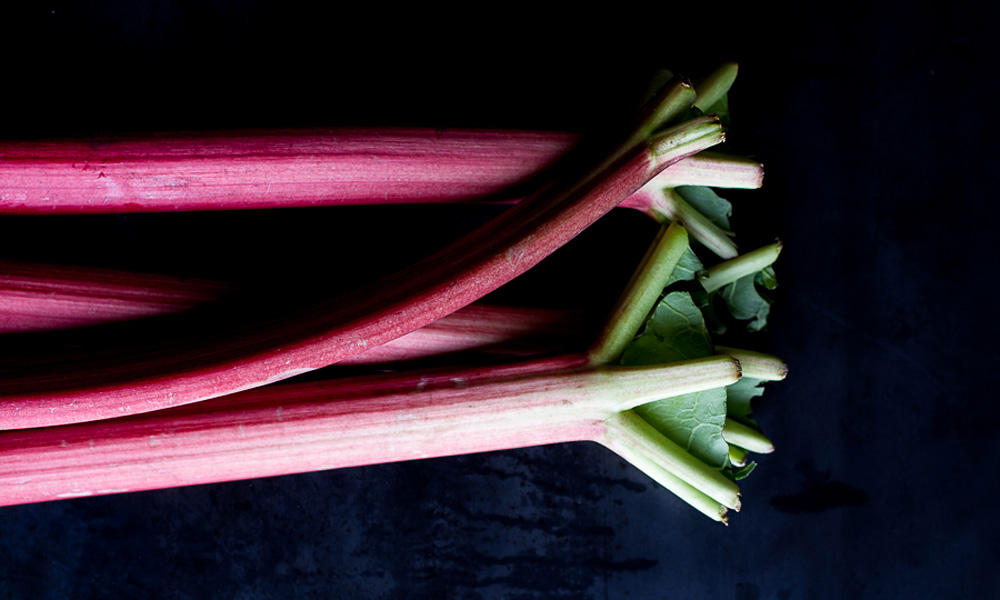
Rhubarb is often called the “pie plant” for its most common culinary use; rhubarb is a vegetable from the buckwheat and garden sorrel family. This tart stalk was most often used for medicinal purposes until the 17th century, when the sugar needed to temper its bite became readily available in England. Rhubarb root produces a rich brown dye similar to walnut husks. In traditional Chinese medicine rhubarb roots have been used as a laxative for several thousand years. Rhubarb has also appeared in medieval Arabic and European prescriptions
Why Try
For its singularly sour flavor. When slightly mellowed with sugar or fruit juice rhubarb is perfect for pepping up pies, tarts, and crumbles and equally good when paired with chicken, pork, beef, and lamb. Most commonly the stalks are cooked with sugar and used in pies and other desserts. Rhubarb is ready to consume as soon as harvested and freshly cut stalks are firm and glossy.
When to Buy
Rhubarb is better from December to March than it is during its natural season, which lasts from March through October. That’s because the winter crop is forced, or transplanted from the fields to dark, warm hothouses. In this environment, the plants grow pretty stalks (rather than red or green ones) that are sweeter in flavor.
How to Buy
Look for rhubarb at supermarkets and specialty foods stores. Field-grown rhubarb can be red or green; the only difference is its appearance. Choose a bunch as you would celery; it should have very crisp stalks. Store rhubarb in a sealed plastic bag in the refrigerator; it will keep for one to two weeks. Before using, trim the stems and discard the leaves, which are mildly poisonous.