
Olive Oil
What
Plantains are not just another banana, they are savory and delicious when green, sweet and luscious when ripe, making this versatile Caribbean staple so much more.
Often called “cooking” bananas because they can’t be eaten raw, plantains are the larger, starchier, and more versatile cousin of the common supermarket banana. They are also referred to as the potato of the Caribbean because they are prepared in similar ways; fried, baked, or mashed. Their attractiveness as food is that they fruit all year round, making them a reliable all-season staple food. Plantains contain more starch and less sugar than the common banana or “dessert” banana, and are cooked or otherwise processed before being eaten. They are always cooked or fried when eaten green. At this stage, the pulp is hard and the peel often so stiff, it has to be cut with a knife to be removed.
An average plantain has about 220 calories and is a good source of potassium and dietary fiber.
Why Try
If you are making an authentic Caribbean meal, this tropical stable is a must. As a side dish, an under-ripe plantain’s slightly sweet, squash-like flavor nicely balances fiery entrée’s. As a dessert, a fully ripe plantain is as sweet as a banana, and taste great poached in sugar syrup, flavored with rum and lemon, or baked with a glaze. Plantains in the yellow to black stages can be used in sweet dishes.
Where to Buy
You can buy them year-round at some supermarkets, at Latin and Asian markets.
Plantains- unlike common bananas – can be used at every stage of ripeness. Don’t worry if the market has only green ones; they will ripen stored in a closed paper bag.
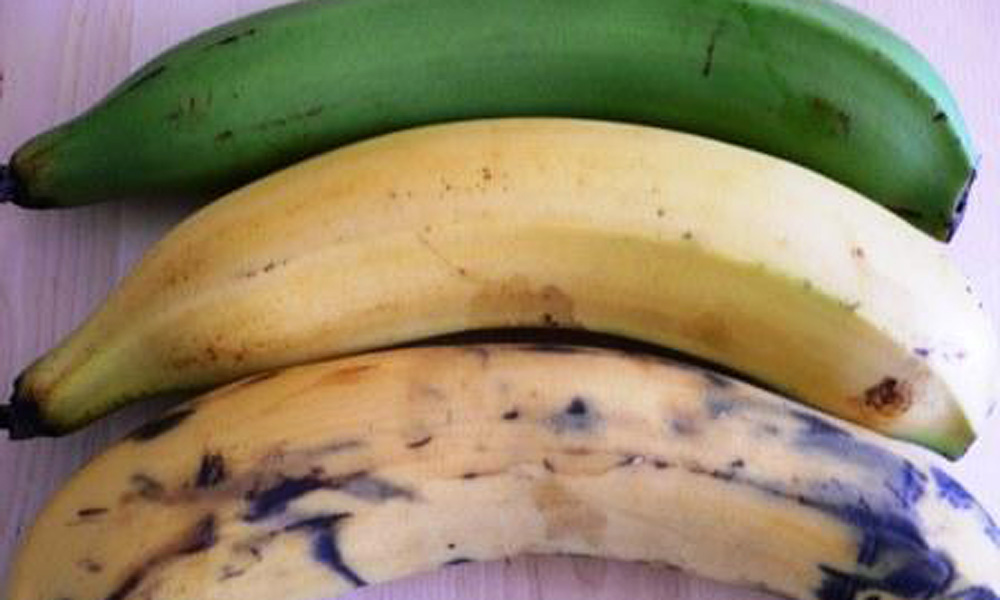
* UNRIPE- When the plantain’s peel is green and blemish-free, the ivory flesh is firm and starchy, and it tastes almost like a potato.
* SEMI-RIPE- When its exterior is yellow and black-speckled, the fruit is slightly sweet and starchy.
* RIPE – When its peel is black and shriveled (up to two weeks from the green stage), the plantain is fully ripened and at its sweetest.