
Olive Oil
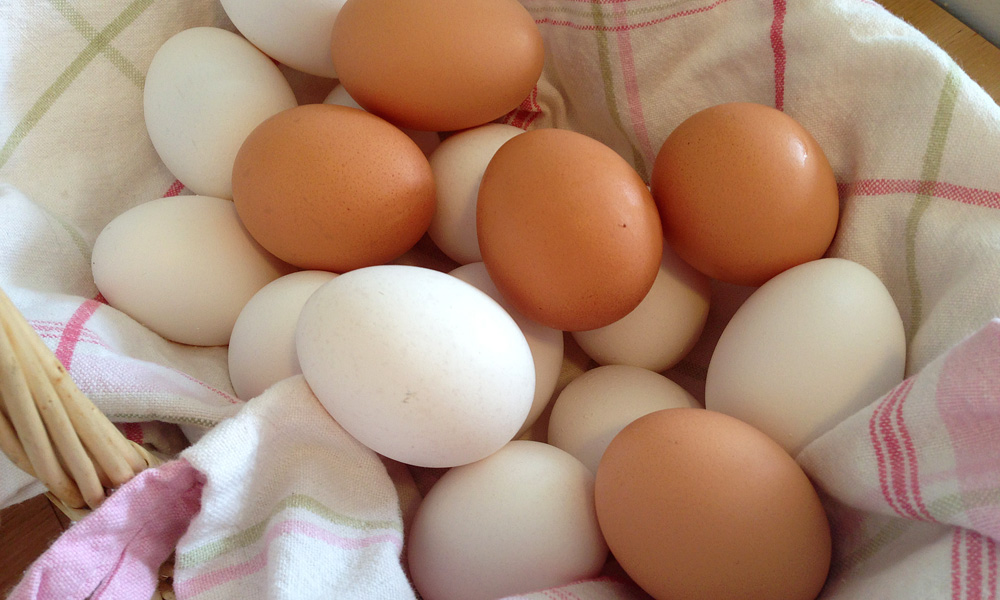
When buying eggs your choices involve size, grade, color, conventional or organic.
Size: Eggs are sold by total weight per dozen, not the size of individual eggs which may vary within a single dozen.
Size Minimum Weight per dozen
Jumbo 30 ounces
Extra large 27 ounces
Large 24 ounces
Medium 21 ounces
Small 18 ounces
Grade:
The U.S. Department of Agriculture (USDA) grade is determined by the interior quality of the egg and the appearance and condition of the eggshell. Eggs of any quality grade may differ in weight (size)
U.S. Grade AA eggs have whites that are thick and firm; yolks that are high, round, and practically free from defects; and clean. Grade AA and Grade A eggs are best for frying and poaching, where appearance is important. U.S. Grade A eggs have characteristics of Grade AA eggs except that the whites are “reasonably” firm. This is the quality most often sold in stores.
Color:
A hen’s breed determines its egg color. White hens usually lay white eggs and hens with darker feathers lay brown eggs. There is no difference in flavor.
USDA Certified Organic:
Eggs come from hens that are given no antibiotics or growth hormones and are fed an organic, all-vegetarian diet, also free of antibiotics. The birds are uncaged inside barns or warehouses and are required to have outdoor access (although enforcement of that requirement has been lax).
The protein in eggs provides steady and sustained energy. One egg has 13 essential vitamins and minerals in varying amounts, high-quality protein, unsaturated fats and antioxidants, all for 70 calories.
The fresher the egg, the harder it is to peel. That’s because with fresh eggs there is little air between the shell and the egg white. So peeling can leave you with ugly, pockmarked eggs.
Read more here: http://www.newsobserver.com/2014/04/15/3784795/cookbook-author-michael-ruhlman.html#storylink=cpy