
Olive Oil
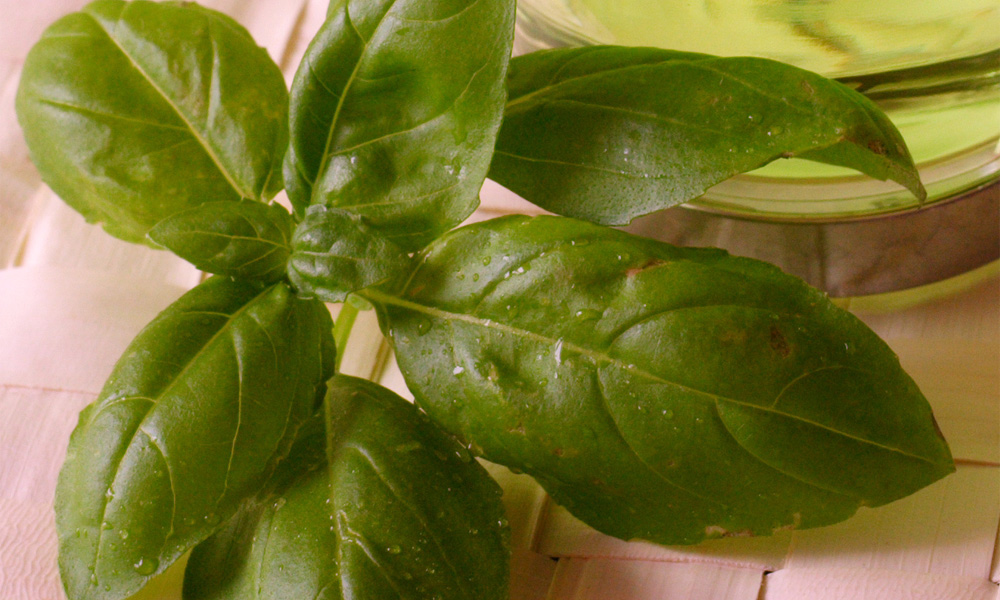
The name basil is derived from the old Greek word basilikohn phyton, which means “Kingly herb”. The belief was that basil’s fragrance was so pleasing it was fit for a king’s house. Basil is still considered the king of herbs by many esteemed gardeners and cooks. In India basil was considered an icon of hospitality, and Italy a symbol of love. In Romania a young man was considered to be engaged if he accepted a sprig of basil from a young lady. The Greeks considered basil to be a symbol of hatred. Basil is a native to India, Africa, and Asia and has been cultivated there for over 5,000 years. Basil is most often found in Italian and Mediterranean cooking. Many Southeastern Asian countries use basil often in many of their dishes.
Characteristics
There are many varieties of basil, but succulent, large-leaved sweet basil is by far the most popular variety for culinary use, although deliciously anise-like Thai basil isn’t far behind. Sweet basil plants grow to around 20-inches tall. The stems are tough, grooved and square, with dark green oval, crinkly leaves 1 to 4 inches long. The tiny white longs stamened flowers should be nipped off to prevent the plant from going to seed. Regular plucking flower heads will encourage thicker foliage. Basil is possibly one of the most difficult herbs to process,
Basil is a member of the mint family; the fresh green leaves are very flavorful. Crumbled and ground dried leaves are less aromatic. Basil has round leaves that are often pointed. Basil belongs in the peppermint family. There are more than 60 different varieties of basil. Sweet basil being bright and pungent, other types of basil offer similar flavors to their names, like cinnamon basil, lemon basil, and anise basil. Basil has an essential place in all kitchens.
Use
The simplicity of basil is best appreciated when it is not cooked at all, such as in salads and pesto-style sauces. When using dried basil instead of fresh leaves in a recipe, use only one-third of the amount. Basil leaves are best used whole or torn; most cooks advice against cutting the leaves with a knife, as this tends to dissipate the aroma.
Use in chicken, fish, and tomato dishes, pasta sauce, and salads; also use for soups, stuffing’s, pesto sauce, eggs and salad dressings. Its stems can be used in flavored oil and vinegars. Often used fresh, but can be frozen or dried.
To keep basil fresh cut stems and place in water and keep out on counter top. Basil does not like the cold and does better at room temperature.
Buying & Storage: Avoid buying fresh basil that is wilted or has black marks on the leaves. Fresh picked basil may be frozen and stored reasonably successfully for a few weeks. Dried basil is dark green in color. Buy dried basil in good-quality packaging and store away from extreme heat, light and humidity.
Family: Lumiaceae
Varieties: sweet basil, bush basil, Thai basil, holy basil, camphor basil, lemon basil,
Flavor Group: Strong
Parts Used: seeds (as a spice), leaves (as a herb)
Culinary Information:
Combines With: * garlic * juniper * marjoram * mustard * oregano * paprika * parsley * pepper * rosemary * sage *
Traditional Use: tomatoes (fresh or cooked) * pasta sauces * cooked eggplant * squash & zucchini * salads * herb sandwiches * poultry stuffing * sauces & gravies * herb vinegars *