
Olive Oil
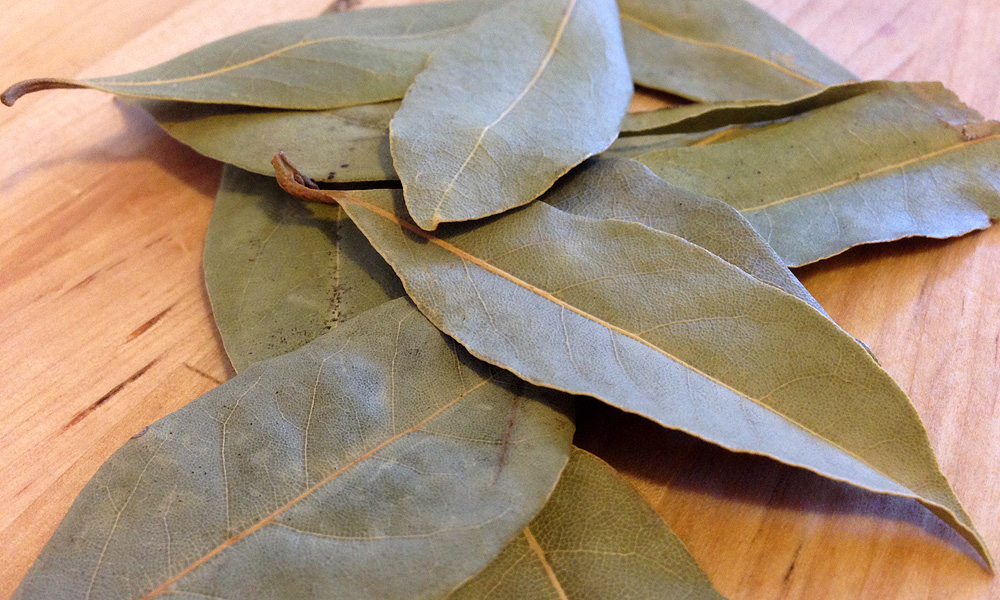
The Latin name for the bay tree comes from laurus, meaning “laurel,” and nobilis, meaning “famous.” In Roman and Greek times we find the winners of death-defying sports such as chariot races crowned with a wreath of bay leaves, in the same way as victorious soldiers. The terms “poet laureate” and “baccalaureate” come from the tradition of giving distinguished scholars and physicians laurel berries in recognition of their achievements.
Bay leaf (plural – bay leaves ) refers to aromatic leaves of several plants used in cooking. Bay leaves fresh or dried are used in cooking many dishes for their flavor and fragrance.
The bay tree is native to Asia Minor. Bay trees were cultivated widely in the Mediterranean and had reached Britain by medieval times, most likely through Roman influence. Romans treasured and revered bay leaves; where Augustus Caesar wore a garland of bays and bryony to protect himself from lightning.
Greeks use this herb primarily to flavor many of their dishes and is a fixture in cooking many European dishes. Bedouins in parts of the Saharan Africa use this to flavor their coffees.
Since the time of Homer it has been cultivated as a shrub and tree. Bay Laurel is associated with purity and acts of purification.
Apollo is said to have made a wreath or crown made with laurel to signify his victory of slaying the dragon “python” and was used to crown Olympic athletes in the time of Greek antiquity.
Bay leaves are widely used as a culinary herb in American and European cooking.
Characteristics:
The leaves are dark green and shiny on top and slightly paler, with more of a matte finish, underneath; they are oblong and tapered, 2 to 4 inches long and 3/4 to 1 1/2 inches wide. Fresh bay leaves, when broken to release their volatile oils, have a pungent, warm aroma with fresh camphor notes and a sharp, lingering astringency. When dried, bay leaves become a lighter green and develop a matte appearance. When crumbled, they release an even more distinctive aroma, with mineral oil-type notes and less bitterness than fresh bay leaves.
Belonging to the bay laurel family, leaves are dried for use. Remove bay leaves before serving a dish; they remain tough and their edges sharp, even after being cooked. They are greenish-tan, that look leathery and waxy. When dried this herb is fragrant and somewhat similar to oregano and thyme.
Use:
Bay leaves are most often associated with slow-cook recipes. They are mandatory in a bouquet garni, a traditional French-inspired bunch of herbs also comprising parsley, thyme, and marjoram that is placed with other ingredients in a pot during cooking and removed when ready to serve. Bay leaves are most often added to stock while cooking. Use bay leaves sparingly, as the flavor is strong and amalgamates readily during cooking.
Add to poached fish or poultry dishes as well as to stocks, soups, stews, casseroles, and pasta sauces. Excellent in tomato- rich recipes. They are used to add a woodsy taste during cooking and often removed before serving.
Buying and Storage: The majority of dried bay leaves available in stores around the world are produced in Turkey. The best grade from Turkey is referred to as “hand-selected.” These leaves have a better flavor and are considerably cleaner and more uniform in size and color. When buying dried bay leaves, look for clean green ones – the darker the green, the better the leaf. Don’t buy yellow leaves, they are of poor quality at harvest or have been exposed to light for too long. When stored away from heat, light and humidity whole by leaves will keep their quality for up to 3 years.
Store in cool, dark cupboard, away from heat or sunlight. Keep container tightly closed. Freezing is not recommended.
Family: Lauraceae
Varieties: “Bay leaf” is used liberally to describe a number of leaves that belong to different families and that are added to recipes like European bay leaf. These include Indian bay leaves, Indonesian bay leaves, or daun salam, Californian bay leaves, Mexican bay leaves, West Indian bay leaves, and boldo
Other Names: bay laurel * European bay leaf, noble laurel * poet’s laurel * Roman laurel * sweet bay * true laurel * wreath laurel *
Flavor Group: Pungent
Parts Used: leaves (as a herb)