
Olive Oil
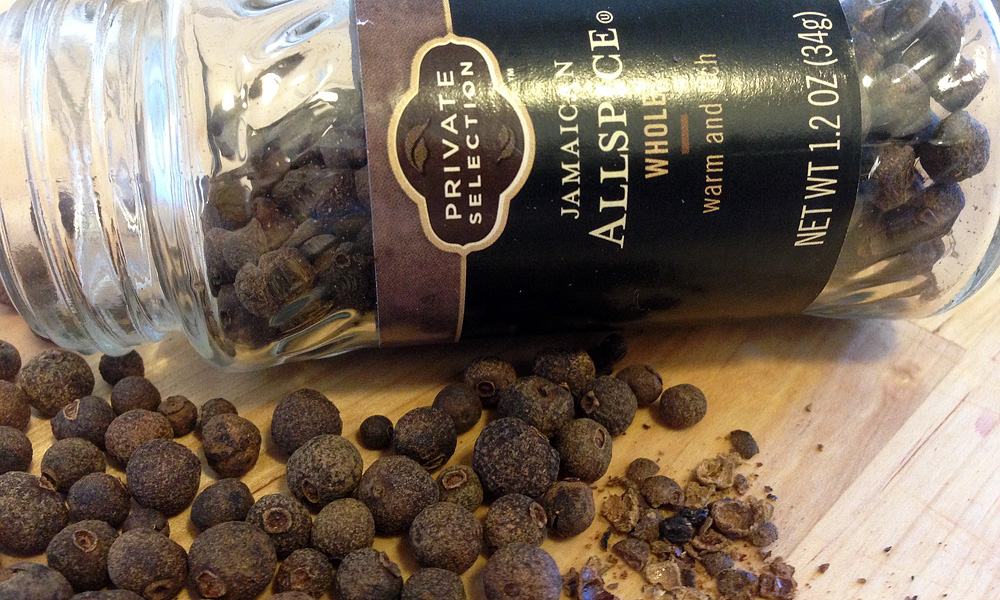
Although allspice sounds like it’s a variety of spices it is not. It comes from a single berry from the Jamaican bay berry tree. When allspice trees are in bloom with their clusters of tiny white flowers, the warm, clove-like perfume in the air is one of the beautiful aromas imaginable.
Also named Jamaica pepper, pepper, juniper berry, and pimento, not be confused with the capsicum pepper, which is a vegetable, not a spice, to name a few. It is the dried unripe fruit of pimento dioica.
Allspice only grows in tropical areas with Jamaica producing the finest; Jamaica is the major exporter of this pungent and aromatic spice. Many Caribbean dishes use allspice and always in the jerk seasoning. Real Jamaican jerk is cooked over a fire of allspice wood.
The name Allspice was coined as early as 1621 by the English, who thought it combined the flavors of cinnamon, cloves and nutmeg.
The Mayans used allspice to flavor their chocolate. Russian soldiers in the Napoleonic war of 1812 would put allspice in their boots to help keep their feet warm.
Allspice is associated with the element of fire and of Mars.
Family: Myrtaceae
Varieties: bayberry tree, Carolina allspice, California allspice
Other Names: bay rum berry, clove pepper, Jamaica pepper, pimento
Flavor Group: Sweet
Parts Used: berries (as a spice)
Characteristics
Spicy berries that taste like a blend of cloves, cinnamon, nutmeg and juniper berries. At first glance allspice looks like a large peppercorn. The green berry contains two seeds and are slightly larger than peppercorns and have a rough reddish-brown exterior.
Use:
Allspice is found in many recipes for cakes and cookies. Allspice contains the same volatile oil, eugenol, that is found in cloves and, surprisingly, in the herb basil. Allspice complements the flavor of tomatoes and is widely used in the manufacture of tomato-based barbecue and pasta sauces. The Scandinavians include allspice in their famous marinated raw herring, and it often features in pickles, and smoked meats,
A small amount of allspice can be used to flavor root vegetables and spinach during cooking, and it also complements vegetable soups, especially tomato. Add to beef dishes, yellow vegetables, marinades, breads, relishes, pickles, cakes, pies and hot spiced tea.
Buying & Storage:
Whole allspice berries should be a consistent dark reddish brown color and spherical. The aroma should be pleasant, mildly clove-like and without any mustiness. The size variations of the berries do not affect quality; however, when using beries whole in foods, select the larger ones for better visual appeal.
Whole allspice, when stored in airtight packaging away from extremes of heat, light and humidity, will retain its flavor for up to 3 years. Freshly ground allspice should be used within a few days so as not to lose the flavor.
Season: Year round
Culinary Information:
Combines With: * bay leaf * cardamom * cinnamon * cloves * coriander seed * cumin * fennel seed * ginger * juniper * mustard seed * nutmeg * paprika * turmeric *
Traditional Uses : cooked root vegetables * cooked spinach * tomato-based sauces * meat & vegetable soups * roast meats * gravies * marinades & sauces * seafood especially shellfish * pickles, relishes & preserves (as whole spice) * cakes, pies & cookies