
Olive Oil
Background
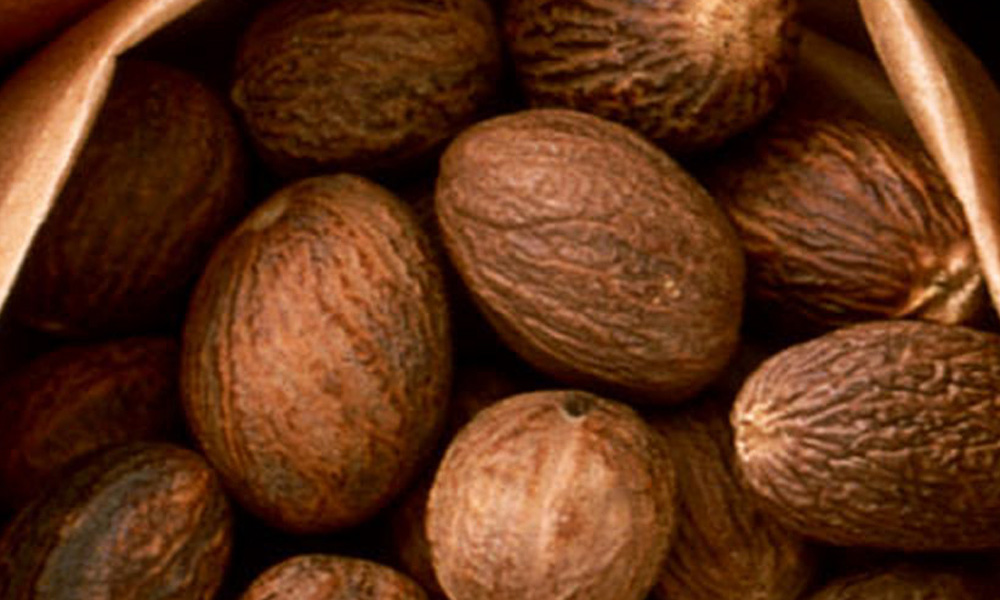
Nutmeg, one of the spices that bring Christmas and the Holidays to life, whether it’s in an eggnog, cookies, cakes to main dishes people the world over have loved this valued spice. The English word Nutmeg comes from the Latin nux meaning nut and muscat, meaning musky.
To gaze on a humble nutmeg today, it is difficult to imagine how much it influenced the global economy and inspired voyages of discovery from the 15th to 17th centuries. In those days, nutmegs, along with cloves were among the most sought-after spices. So strong was the desire to have control of the nutmeg market that the Dutch East India Company had their own army. In 1760, the price of nutmeg in London was 85 to 90 shillings per pound, a price kept artificially high by the Dutch voluntarily burning warehouses full of nutmegs in Amsterdam. There was a death penalty imposed on anyone cultivating or selling the spice anywhere except the Spice Islands. However there was one, Pierre Poivre ( the original Peter Piper of the nursery rhyme) who succeeded in smuggling some nutmeg and clove seedlings out of the Moluccas and was successful in growing a small number of trees on Mauritius. Nutmegs are now grown in the Caribbean, India, Sri Lanka and the best-quality are grown on the island of Granada.
Nutmeg has been known to be a prized and costly spice in the medieval times. At one time, nutmeg was consider one of the most expensive spices, where 100 years ago in England a couple of nutmeg nuts could bring a person financial independence. In the Elizabethan times it was believed to ward off the plague and then became a very costly spice. The small island of Banda up till the middle of the 19th century was the world’s only known place for Nutmeg and mace. Nutmeg was traded by the Arabs in the middle ages and sold to the Venetians at high prices. None of the Europeans at the time knew of it’s location and the traders weren’t about to divulge the location of this highly prized spice nor were they able to find the location.
During ancient times, the Romans and Greeks used Nutmeg as an stimulant for the brain, it can reduce stress and fatigue and improve concentration. Nutmeg was a staple in Chinese medicine to help reduce inflammation, aching joints and abdominal pains. Nutmeg is a common ingredient in most toothpastes and helps rid your mouth of bacteria. Nutmeg can also help with sleeping, just drink a cup of milk with nutmeg powder.
The Plant
Of all the sweet spices, the strongest-tasting one, nutmeg, shares the same parentage with a lesser-known spice, mace. Nutmeg and mace may share some similarities in flavor, nutmeg and mace are used in very different ways and should always be viewed as separate spices. Both nutmeg and mace share the botanical name Myristica fragrans Houtt; and are from a tropical evergreen tree.
Nutmeg trees are either male or female and only one male tree is required to fertilize 10 female trees; so culling unwanted male trees is necessary. However, the sex of a tree cannot be determined until the tree is about five years old. which reaches full maturity in 20 years and can keep producing fruit for up to 40 years. Harvesting of the first nutmeg trees takes place 7-9 years after planting, The nutmeg fruit looks like a firm yellow nectarine and is exactly the same shape.
Buying and Storage
Nutmeg is available year-round. Whole and ground nutmegs should be stored in airtight conditioners and kept away from extremes of heat, light and humidity. Whole nutmegs will last at least 3 years and ground nutmeg will keep its flavor for a little more than 1 year.
Use
To get the best flavor, many people like to grind or grate their nutmeg fresh, A nutmeg mill or grater that will shave fine pieces off the whole nutmeg may be a useful purchase; or by using the finest part of your kitchen grater. Although predominantly sweet in character, it should be added sparingly. Nutmeg also compliments vegetables, especially root vegetables, making steamed potatoes, carrots, and squash delicious. Try a little nutmeg on cooked spinach; the robust sweetness seems to neutralize the somewhat metallic taste of spinach.
Nutmeg is used to flavor many dishes, usually in ground or grated form. Most chef’s cooking with Nutmeg prefers to use freshly grated nutmeg from the seed in their dishes.
Matches well with: broccoli, cabbage, carrots, cauliflower, cheese, custards, eggs, fruits, lamb, pasta, potatoes, pumpkin, raisins, ricotta cheese, rice, sausages, spinach, squash, stuffing’s, veal.
Some dishes that nutmeg compliments are Fettuccine Alfredo, Quiche Lorraine.
It is not recommended to feed your dog eggnog because of the Myristicin poisoning, Nutmeg has been used as an intoxicant by students, prisoners, alcoholics and Marijuana smokers.
Culinary Information:
Combines With : * allspice * cardamom * cassia * cinnamon * cloves * coriander seed * ginger * vanilla *
Traditional Uses: * cooked squash in butter * squash & potato (before baking) * cooked spinach * cheese sauces * milk & rice puddings * sweet, spicy cakes * cookies *